FAQs

Since we have shared our plans to live as nomads, we have been getting many questions on how we are planning to live this lifestyle.  I have compiled a list of the most frequently asked questions.  However, I would like to emphasize that this is our PLAN, and once we are out there ANYTHING can change.

Believe it or not the most frequently asked question is:

  • How will you do your laundry?

We are planning on going to laundromats.  There have been various times in my life when my only option was a laundromat so I am no stranger and really it isn’t that bad.  You put all loads in at the same time so it is quicker than doing it at home one load at a time and some laundromats even have free wifi these days so we can work on the computer and not burn up our own data plan.  I think we may need to keep rolls of quarters on hand for the washing machines and dryers.

  • Where will you put your clothes?

There are cabinets above the bed where we are planning on storing most clothes. Two cabinets for each of us.  I am going to try to compact clothes into various packing cubes.  We will not have much, it will be outdoor adventure gear for the most part.

image

  • Where do you go to the bathroom?

At first, we are planning on staying in campgrounds with toilets available.  However, the van does have a porta-potti.  It is not plumbed into the van, it is a separate device with a 5 gallon holding tank.  Supposedly you can empty the tank into any toilet, but I really have no idea how that works.  We will need to figure it out eventually because we would like to do some dispersed (free) camping on BLM or Forest Service land to lower our costs which means NO services.  One step at a time! We have plenty to learn.

IMG_1625
The Thetford Porta Potti Curve


  • Where do you take a shower?

For the most part we will be taking showers at campgrounds.  Also, some National Parks, RV Parks, laundromats and truck stops have pay showers that you can use whether you are staying there or not.  The van does have a tiny shower that we can use in between REAL showers, but water and space are limited in the van shower.

IMG_1624
Tiny shower
  • What types of places will you stay in?

To start off I think we will stay in campgrounds.  The van does have the ability to be plugged in to the electric and water at a real RV park, if we choose to do that, but so far I have been turned off to the RV parks.  The ones I have seen look like big parking lots.  I prefer spaced out campsites with trees in between.  Since the van has solar panels that recharge the batteries automatically that run all the electrical devices and the heater and hot water heater run off the diesel in the gas tank we would like to learn how to “boondock” – camping for free on public lands with no services.  All in due time.

  • Are you giving up your apartment?

Yes.  No reason to pay for an apartment when we are not there.

  • Where are you storing your furniture?

When we moved out of our house, the quality large furniture was sold on consignment.  Now we do not have much left and most of it will go to Salvation Army or Goodwill.

  • Where are you going?

Mostly in the US, with a short stint in Canada, I have always wanted to see the Canadian Rockies.  We are going to chase the weather.  We will be in the northern part of the country in the summer and the south in the winter.

  • How will you get mail?

We have signed up for a traveling mailbox.  They scan your mail and email you.  If you want, they will forward it to where you are.

  • How are you getting health insurance?

The health insurance laws and rules seem to change every year. We are using COBRA for the rest of this year and we will reevaluate next year.

  • What kind of gas mileage do you get?

The van gets about 18 MPG based on our short trips so far.  It is a diesel engine.  Diesel is cheaper than gas at the moment.  Fuel will be a constant expense.

  • What are you doing about your doctors?

Neither one of us has any chronic illness requiring constant medical visits so I don’t think this will be an issue.  Also we are planning on coming through town next spring to take care of any visits to our normal dentist/doctors and take care of any local business we may have.

  • Where do the bikes go?

The van was built with a platform bed with space underneath specifically for the bikes.  A bracket was installed to clamp the fork into after removing the front wheel.  More on this later.

  • How long is the van?

The van is about 22 ½ feet long.  This is short by RV standards.  We are hoping we can take it places where normal RVs cannot go because of vehicle length restrictions.

  • How high is the van?

I believe the van is about 9 – 9 ½ feet high.  This will be an adjustment, we will always need to be aware of what is above us, like low hanging trees.  We cannot go into most parking garages or any low roof situations.


Downsizing to a Van

As I am boxing up stuff for the Goodwill, going through old boxes figuring out what can be thrown out, I am thinking there will be no space in the van, I can only bring a very limited amount of things.  I am getting overwhelmed thinking what should I do with this stuff, what does this connector go to, do I even have that camera any more, would anyone want this GPS device, it is from 2007.  Will I use this hand blender?  I never use it now, but maybe on the road it will be useful. Thinking about all the money spent over the years on cameras, iPods, iPhones and GPS devices.

IMG_1633

I am just thankful that we went through one downsizing exercise already when we sold our house 16 months ago and moved into an apartment.  I cannot imagine going from the house directly into the van.  That seems impossible.  I have a new found empathy for the people on those tiny home shows that don’t want to part with their stuff.  I thought I was much more advanced in minimalistic ways than they are, but today I am realizing I have no idea if I am doing the right thing getting rid of everything!  I just keep coming back to – if it is sitting in the apartment and I am not using it, I do not need it.

Besides the traditional garage sale (we did have one when we sold our house) here are some other ways to get rid of stuff.  Mattresses are very hard to get rid of these days.  I have scheduled a Salvation Army pickup for the bed.  I hope they take it.

Shredding Event – bring bags of documents to be shredded.  They ask for a small donation.

Consignment shop – if your furniture sells you get half of the money

Electronics Recycling – cities sponsor this, drop off old computers, TVs, Stereo stuff

Craig’s List –

SellBackYourBooks.com – they will give you money for books

Some jewelry stores buy old gold necklaces, earrings

Bulk Trash Pickup – if you are still in your house and pay the city for trash pickup you can put furniture and mattresses out for bulk pickup.  Since we are in an apartment that is not an option.

Goodwill – they take almost anything except mattresses


Combat the Sitting!

At the very heart of every cubicle job is the requirement to sit for at least eight hours a day.  I know employers are starting to implement programs to encourage people to move more, which is great, but no matter how you look at it, they want you to sit, this is what you are getting paid to do.  Sounds pretty easy, however we now know that all this sitting is killing us .  According to studies, it doesn’t matter if you go to the gym for an hour every day or run your 5 miles every morning, the effects of sitting for extended periods of time take a toll on your body and will cut years off your life.

sitting-kills-moving-heals-fb

If you live in a cube, and you want to stay healthy you need to incorporate movement into your day somehow, someway.  It is a constant struggle.

An easy way to add movement is to get into the habit of walking places.  Keep a comfortable pair of shoes at your desk (maybe some deodorant as well).  Think about places nearby where you can walk to get your lunch. Grocery stores, sandwich shop, juice bar, Starbucks (maybe this one is reserved for an afternoon pick-me-up).  If you have a meeting in a nearby building, leave your desk early and walk over.

Even easier, set a timer on your computer to go off every 20 minutes and when it goes off, stand up and stretch!

One of my favorite ways to add activity to the work day is to commute by bike.  Lucky for me I live close to the office, and actually, living close to work by itself means less time sitting in the driver’s seat and hopefully more time moving. If you are a two car family, and one person is committed to bike commuting, you can sell one car, and save more money for your exit plan.  There are a lot of logistics to think about when you plan to commute by bike, but in my opinion, it is a great way to start and end your work day and worth the planning.

You can see my Electra Townie above, which I love to ride to work, 7 speeds, bell on the handlebars, laptop and lunch in tow.  In preparation for our exit, my husband has found a buyer for my beloved Townie!  Hopefully, it will bring someone else some happiness.

Some things to think about if you are considering riding your bike to work:

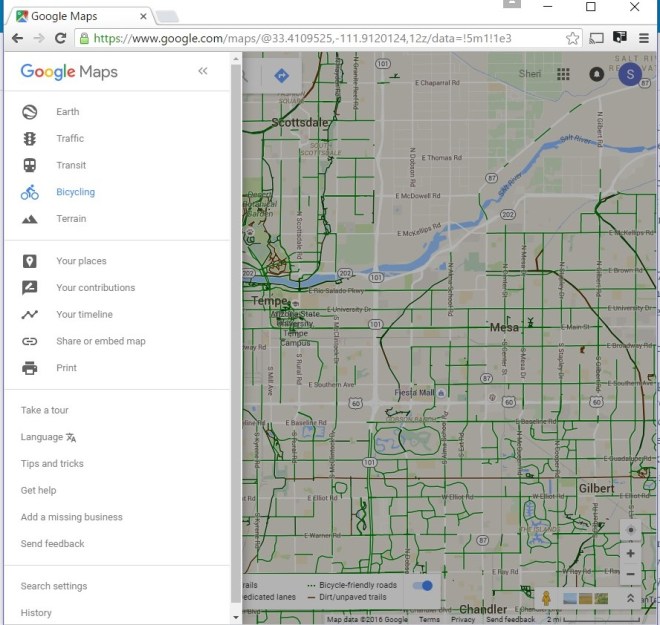
  • What route will you take to get there? Google maps has an option that will show you bike lanes and bike trails.  You can study this to determine a route.  If you have to cross a highway in your travels look for a walking bridge that crosses it somewhere.  This is much safer than a highway on/off ramp area where there can be a lot of traffic.  I recommend trying out your planned route on a weekend first to see if it will work and you can see approximately how long it will take you to get to work.

bikemap

  • Will you need to shower when you get to work? Some buildings do have shower facilities available, but if you are taking a shower now you have the added issue of all your toiletries and a towel.  If there is no shower available or you don’t want to shower you can always freshen up with some wipes and deodorant.
  • Will you need to change your clothes? This depends on the dress code at work, what type of riding you are doing, how fast you are going, how sweaty you will get, what type of bike you have. My thinking is if you have a nice big seat, a chain guard to keep the grease away, fenders to catch any dirt being thrown up and you go at a leisurely pace to keep the sweat down, you can wear your normal work clothes on the bike.  If you want to change your clothes, now you need to store your work clothes at work somewhere.  I have heard of people bringing all their clothes for the week in the car one day to work and storing them there then bringing them all home in the car another day.
  • How will you carry your laptop back and forth? Some people put it in a backpack.  I don’t like that idea because I think it would give me a sweaty back.  I added baskets to the back of my bike and I bungee the laptop in for the ride.
  • Where will you lock up your bike? Check out your building ahead of time and see where the bike racks are.  If there are none, what can you lock your bike to?  Can you bring it inside?
  • What type of bike should you use? This depends on what you have available all ready (maybe you can fix up an old bike in the garage), how far you have to go (a long ride may require a road bike to go fast enough), will you be on busy roads or on an off road bike path with people walking their dogs and pushing strollers (you may like a bell for this type of riding).
  • What about helmet hair? My way of dealing with this is to not wear a helmet and stay away from the cars as much as possible.  If you have to wear a helmet you may need a hair dryer or flat iron at work.  Or put your hair in a ponytail, what’s more important your health or your hairstyle while you are in your cube?
  • What if it is raining or dark? Rain can be a deal breaker for me, but if you have the correct rain gear and you are serious, go for it! Darkness is no problem, just make sure you have lights on your bike front and back, preferably blinky lights so you can be seen by the cars.  Make sure you keep them charged up or you carry extra batteries.  Reflective clothing is helpful as well.


The Adventure

Things are coming together.  The Adventure Mobile has been purchased, a rough plan of travel has been devised and a start date has been chosen.  The biggest remaining task at this point is getting rid of whatever will not fit into the Adventure Mobile.

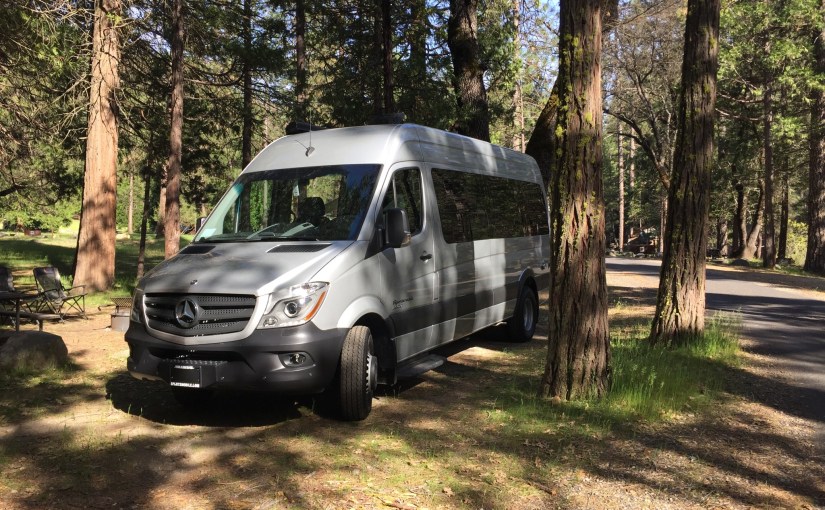
The Adventure Mobile that we selected is Mercedes Sprinter cargo van which has been converted into a camper van.  The idea is that a van is more agile than a real RV and we will be able to get into more beautiful places than if we had a large RV or travel trailer.  For example, there are many beautiful mountain passes with vehicle length restrictions.  The van is about 22 feet long so we are hoping we can bring it many places.  We do not have 4-wheel drive however, so we will be limited on primitive dirt road conditions.  We are striving for a minimalistic lifestyle that values experiences rather than material possessions.

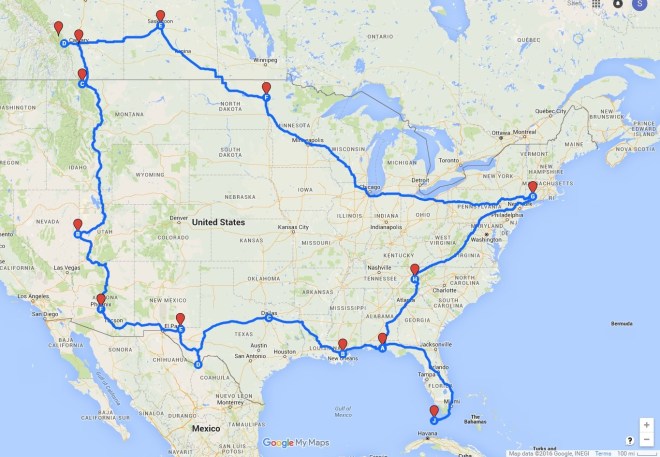
map1

Here is a possible travel plan for our first year of travel, however we are not totally committed to any of it.  We want to keep things flexible, be able to stay longer somewhere that we want to explore further or leave someplace if the weather is unpleasant.  We both enjoy weather watching and forecasting so this will be a very important aspect of our new lifestyle.  This plan includes some National Parks that we have been wanting to visit and family and friends scattered all around.  However, once I saw this plan on a map, I couldn’t help but wonder if it is just too much driving.  I want to spend time immersed in nature, not stuck in the driver’s seat…  or more likely the passenger seat.

We are planning on starting out before the low desert of Arizona heats up too much.  Last summer we vowed to NOT spend another hot summer here.  This is a great place to be in the winter, but summer is uninhabitable. We do planning on visiting the eastern side of the country, we both grew up there, but I know my heart belongs to the west.